
In Praia da Vitória, rally racing moves forward, but not without looking back.
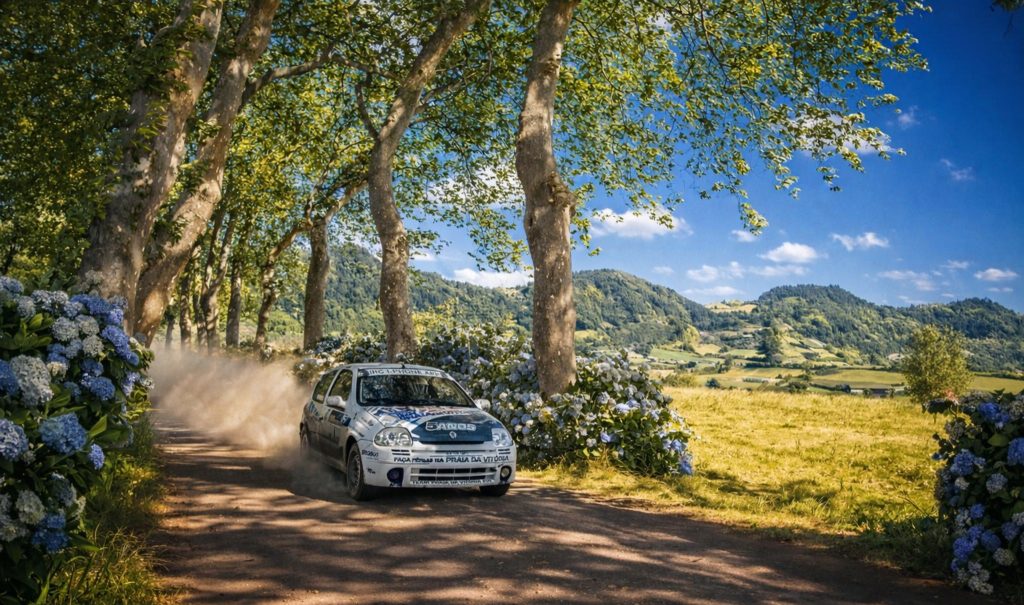
On Terceira, rally racing has never been just a sport. It is sustained, year after year, by people who commit themselves to building it, protecting it, and passing it on to the next generation. For decades, one of those people was Olavo Esteves.
He was part of the sport when it was still finding its traction locally, and he remained as it evolved into something more structured, more competitive, and more visible. On an island where motorsport depends less on scale and more on commitment, that kind of continuity does not happen by accident. It is essential.
He began behind the wheel and quickly proved he belonged there. Competing in the Azores’ Formula 2 category, Esteves became a three-time regional champion, known not only for winning, but for how he drove. He was methodical, precise, and deeply attuned to the island’s demanding roads, and accounts from the time describe a driver capable of controlling events through consistency and pace, building results over time rather than relying on moments.
But what ultimately defined him was not just how he competed. It was what he chose to do after.
Over the years, he did something very few competitors do. He stayed, and he built. He moved from driver to organizer, from participant to catalyst, helping create the conditions that allowed rallying to grow on Terceira. Through his work with events, teams, and local initiatives, including his own project, OEC – Olavo Esteves Competições, he played a decisive role in building the structure that supports the sport on the island today.
He was known for the quiet but determined way he remained present. Not always at the center of attention, but almost always at the center of what made things happen.
The Terceira Automóvel Clube would later recognize him as a defining figure in local motorsport. That recognition is not tied to a single moment, but to years of consistent presence. For decades, he remained active—organizing, supporting, and advancing the sport in ways that were not often invisible, but always essential.
That effort was not limited to maintaining what already existed. He also worked to expand what rallying on Terceira could be. He was behind initiatives such as the Ladies Rally Trophy Açores, a women-only competition—an uncommon format at the time that helped open the sport to new participants and perspectives. He also promoted events like the Praia da Vitória Motor Show, where different disciplines and formats came together, bringing new energy and new audiences into local motorsport.
These were not small changes. They were deliberate choices with real impact. He worked to broaden the sport, to make entry possible for new participants, and to create space for different ways of experiencing motorsport on the island. In that sense, Esteves did not simply maintain rallying. He helped redefine it.
When he passed away in December 2025, the response across Terceira reflected that broader impact. Clubs, organizers, and competitors spoke not only of his achievements, but of his presence. He had been part of the sport for so long that it became difficult to separate the two, and his absence was not abstract. It was felt.
A few months later, Praia da Vitória hosts its first official rally: Rali da Praia 2026.
For the municipality, it marks a beginning. But within the structure of the event, there is also a clear recognition of what made that beginning possible. The opening stage carries his name—a quiet but meaningful tribute to his role in developing the sport locally. This first edition brings together 37 teams and reflects a maturing rally structure on the island, built through collaboration between local organizations and long-standing contributors to the sport.
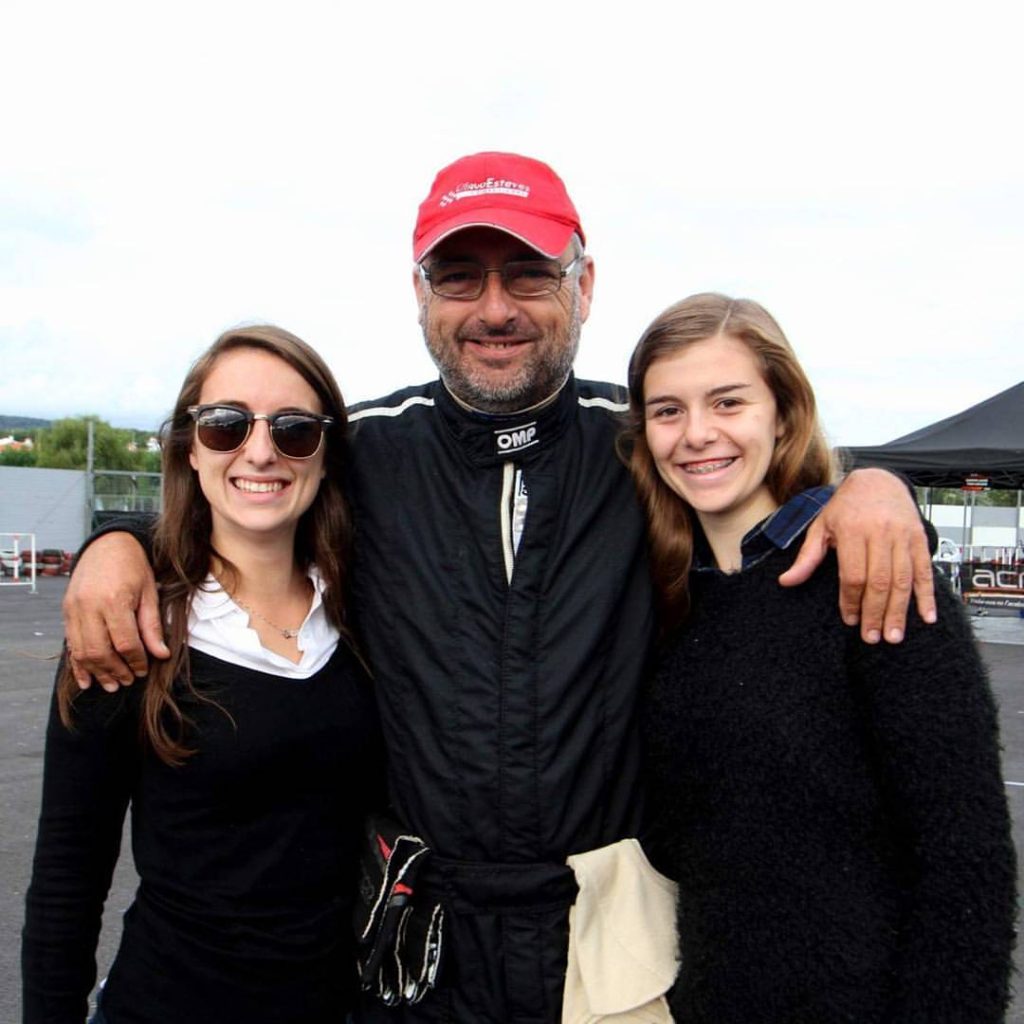
Among those competing are his daughters, Catarina Esteves Pedroso and Beatriz Esteves, racing together as driver and co-driver.
For Catarina, taking the wheel also means carrying everything she learned from her father with her. “My father always made the sign of the cross on himself before every stage, and I do the same,” she says. “He used to say, ‘When in doubt, accelerate—trust that it’s already passed,’ and that stays in my mind.”
The memories she holds are vivid and specific. She remembers him at the end of a stage, standing in the middle of the road with headphones on, following the times over the radio, arms raised in celebration.
But her connection to the sport began long before she was ever in a car. Catarina remembers being a child, spending evenings in the workshop, sitting on the floor on a piece of cardboard while her father prepared the car. She played with old parts and dirty tools, and as she says, she always preferred that to playing with dolls.
For Beatriz, the meaning of this moment runs deep as well. “We are not here for the competition, we are here for him,” she explains. “Every kilometer is a way of remembering him, honoring everything he did, and keeping his legacy in motorsports alive.” Racing alongside her sister strengthens that feeling, not just as teammates, but as family. “We are together celebrating the father we had and our bond, which in some way helps ease the pain of his passing.”
Her memories reveal a quieter side of him, away from the public view of rallying. She remembers him during events, in the middle of the chaos, with everything depending on him and countless responsibilities demanding his attention, and still finding a way to stop.
He would lean against the barrier and watch her drive karts, quietly, without saying much. He was not a man of many words, and he did not easily express what he felt, but he did not need to. She knew, from his look and from the way he made a point of being there, that he was proud. That presence is what remains.
There is a quiet way that legacy works in places like this. It is not defined by scale or visibility, but by continuity—by what remains active, by who continues to show up, and by how the sport is passed from one generation to the next.
Olavo Esteves helped build rallying in Praia da Vitória long before the municipality had a rally of its own. Now that this rally begins, his name is part of it—not only in memory, but in the structure of the event and in the people who continue to take part.
The roads are the same. The sound is the same. What has changed is who now takes the wheel.
And in Praia da Vitória, that continuity is no longer memory. It is in motion.
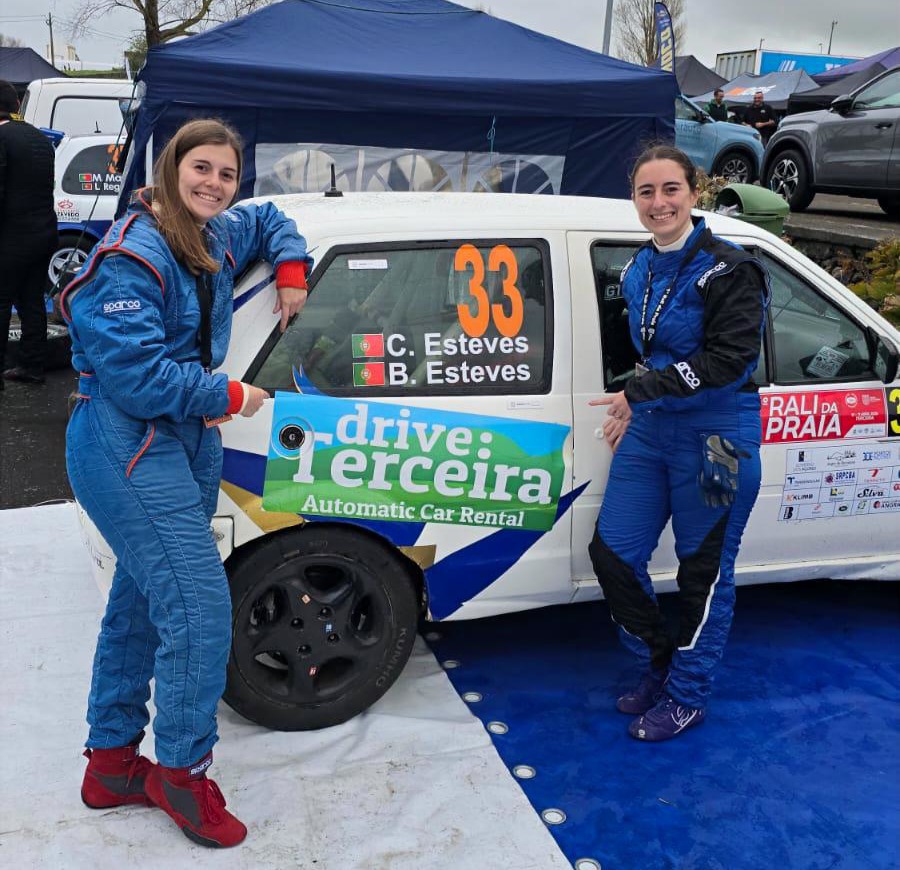
At the request of Catarina Esteves Pedroso and Beatriz Esteves, they extend a special thank you to Fábio Riqueza, who provided use of his rally car with mechanical responsibility, whose support was essential in making their participation in this rally possible.
They also wish to acknowledge and thank the sponsors who stood with them: Drive Terceira, Click Ernesto Photography, Concerta, Titauto, Autocanto, Reboques Praia, Delman, Gandalata & Ventos, as well as other partners who prefer to remain anonymous, and the many friends who helped make this effort possible.