
Everything visitors need to know about gasoline, diesel, pump labels, octane, pricing, and simple Portuguese phrases to make fueling easy while driving in Portugal, Madeira and the Azores.
1. Gasoline vs Diesel in the Azores — What Tourists Need to Know
Europe — and Portugal in particular — has a long tradition of diesel-powered passenger cars. For decades, diesel vehicles offered better fuel economy and strong torque, making them popular across the EU. As a result, many cars available for rent on the islands may surprise visitors: a compact hatchback or small SUV that would be gasoline-powered in North America might very well be diesel-powered in the Azores.
Gasoline (“Gasolina”) is still common, especially in smaller city cars and newer hybrid or automatic vehicles. But diesel (“Gasóleo”) remains widespread, especially in slightly larger vehicles and fuel-efficient touring models.
For travelers, the most important takeaway is simple: never assume your car takes gasoline just because it’s small or modern. Always verify — and you can do this quickly and reliably by checking the fuel cap and the rental agreement.
2. How to Tell What Fuel Your Rental Car Uses
Fuel mix-ups are rare in Portugal largely because labeling is clear and fuel caps usually contain unmistakable warnings. But it’s still important to double-check — especially if you’re tired, rushed, or pulling into a station for the first time.
The Fuel Cap
This is the most authoritative location.
- Gasoline vehicles typically show labels like “Gasolina,” “Unleaded,” “E5,” or “E10.”
- Diesel vehicles display “Gasóleo,” “Diesel,” or “B7.”
The Rental Agreement
Most rental companies print the fuel type in bold text so customers can’t miss it. If you rent with Drive Terceira, every contract includes a clearly marked “Fuel Type” line.
Dashboard Labels
Newer European models may display a gasoline or diesel icon near the fuel gauge. If you are still unsure, photograph the fuel cap and send it to your rental provider for confirmation — Drive Terceira responds quickly and will confirm the correct fuel type.
3. Gasoline in the Azores: Understanding 95 vs 98 Octane
European gasoline uses a different measurement system than in the United States. The numbers you see — 95 and 98 — refer to RON octane, not the (R+M)/2 method used in the U.S. That means European 95 is roughly equivalent to American unleaded “regular,” and 98 is a premium formulation.
Gasolina 95 (E5) is the standard and recommended fuel for virtually all rental cars. Gasolina 98 (E5) is a higher-octane formulation for performance engines. Most travelers will never need 98, and using it in a 95-rated car does not improve performance — it only increases cost.
4. Diesel (“Gasóleo”) — Why It’s So Common in the EU
Diesel continues to be widely used in Portugal despite evolving emissions policies. In the Azores, diesel vehicles remain common because they deliver excellent fuel efficiency, provide strong torque for the islands’ hilly terrain, and are often more affordable to operate. European manufacturers historically emphasized diesel technology, which also helped establish the diesel market share.
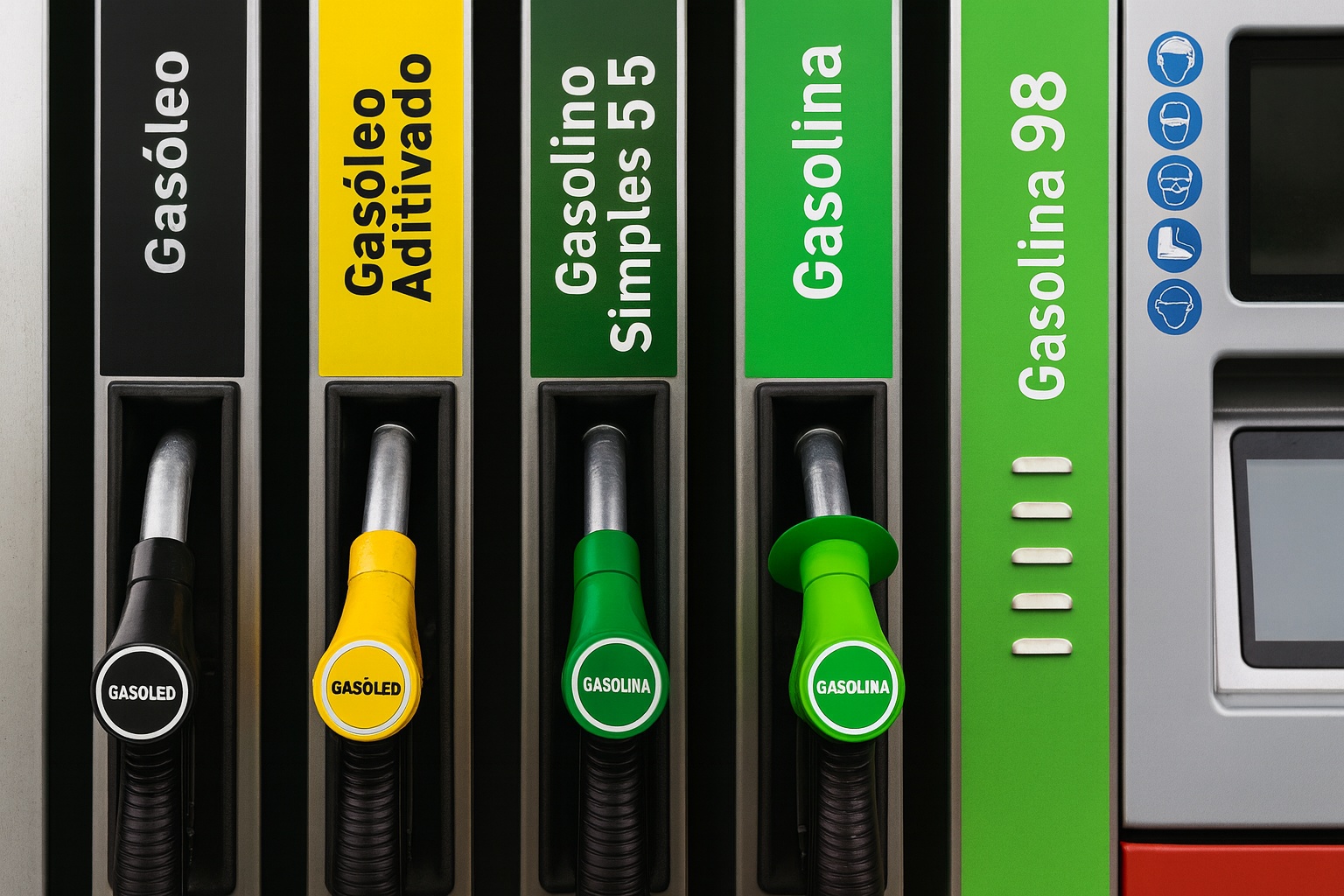
Diesel pumps are labeled Gasóleo or Diesel, and the nozzles are typically black or yellow. One helpful detail for travelers: diesel nozzles are wider than gasoline nozzles, which helps prevent accidental fueling of the wrong type.
5. Fuel Pump Labels in the Azores and Portugal
Fuel pumps across Portugal follow standardized EU labeling rules. This consistency helps travelers move confidently between islands, towns, and fuel brands (Galp, Repsol, CEPSA, Terauto, etc.).
Gasoline Labels
- 95 E5 — Regular unleaded
- 98 E5 — Premium unleaded
- “E5” indicates up to 5% ethanol content
Diesel Labels
- B7 — Diesel with up to 7% biodiesel
- Gasóleo — Standard Portuguese terminology
Typical colors (not universal): green often indicates gasoline; black or yellow often indicates diesel. Always read the written label rather than relying on color alone.
6. How to Pay for Fuel in the Azores
The fueling experience in the Azores is a mixture of modern self-service pumps and traditional full-service stations.
Full-Service (Most Common)
Many stations still employ attendants. When you pull up, an attendant may approach your car and assist with fueling. You simply tell them the type of fuel you want, the amount you want (e.g., €10, €20), or that you want a full tank (“cheio”). They’ll pump the fuel, reset the pump, and direct you to pay inside.
Self-Service (Pagamento Automático)
These automated kiosks operate 24 hours a day. The process is usually: insert your card, select the fuel type, pump the fuel, then retrieve your receipt. Most U.S. and international credit cards work without issue.

7. Useful Portuguese Phrases for Fueling
Speaking Portuguese at the gas station is easier than most visitors expect. With just a few simple expressions, the entire fueling process becomes smooth — especially if you’re interacting with attendants. Even attempting a basic phrase often creates an instant friendly connection.
| English | Portuguese |
|---|---|
| 95 gasoline, please | Gasolina noventa e cinco, por favor. |
| Diesel, please | Gasóleo, por favor. |
| Fill the tank | Cheio, por favor. |
| Twenty euros of diesel | Vinte euros de gasóleo. |
| Unleaded gasoline | Gasolina sem chumbo. |
8. Liters vs Gallons — Important for U.S. Travelers
Fuel in Europe is sold by the liter, not the gallon. A quick reference: 1 U.S. gallon = 3.8 liters. This conversion helps explain why prices can appear higher at first glance. When converting, multiply the price per liter by 3.8. Example: €1.67 per liter ≈ €6.35 per gallon. European prices also include higher fuel taxes, but the measurement difference alone often surprises American travelers.
9. Fuel Prices in the EU, Mainland Portugal, and the Azores
Fuel pricing varies across Europe, Portugal, and the Azores — and understanding these differences helps travelers plan better and compare costs meaningfully. Let make sure of the costs for fueling in the Azores, Madeira and Portugal.
European Union Fuel Prices (EU Average)
The European Commission maintains the Weekly Oil Bulletin, the most reliable and standardized fuel-price dataset in the EU. Official resource: European Commission – Weekly Oil Bulletin.
Mainland Portugal
Mainland prices fluctuate weekly in response to market conditions. Typical ranges (2024–2025): Gasolina 95 ~€1.70; Gasolina 98 €1.85–€1.95; Diesel €1.30–€1.40.
Azores (Government-Regulated Prices)
The Azores are unique because fuel prices are set by the Regional Government. Prices do not fluctuate weekly and remain consistent across all islands. Typical ranges (2024–2025): Gasolina 95 ~€1.65–€1.70; Gasolina 98 €1.85–€1.95; Diesel €1.45–€1.60. This stability is convenient for both residents and visitors.
10. What Happens If You Use the Wrong Fuel?
Fueling mistakes can happen, but knowing what to do minimizes risk:
Gasoline in a Diesel Engine
This is the more serious error. Do not start the car. Contact your rental company immediately. Starting the engine will circulate the incorrect fuel and lead to expensive repairs.
Diesel in a Gasoline Engine
Less common because the diesel nozzle often won’t fit into a gasoline filler neck. But if it happens: do not drive the car. Call for assistance right away. Drive Terceira provides 24/7 support for exactly these situations and can coordinate immediate help.